
Eagle County Criminal Court Records
A criminal court record is the case file kept by the Clerk of Court after a charge is filed in court. In Eagle County, felony cases are District Court matters after filing or transfer. Misdemeanor cases and many preliminary felony complaint events may be County Court matters. The court record can show how an accusation moved through hearings, whether the defendant entered a plea, how motions were handled, and whether the case ended in dismissal, deferred judgment, conviction, acquittal, or sentence.
Police and sheriff reports are separate. The Eagle County Sheriff's Office may hold arrest-side records, but the court file shows the filed case. The 5th Judicial District Attorney screens criminal matters for Clear Creek, Eagle, Lake, and Summit counties and decides what formal charges to file or whether diversion is offered. A closer look at the filed charge path is available under Eagle County arrest records and court charges.
The 5th Judicial District Attorney biography and role page is a source for the local prosecutor context behind Eagle County criminal court records.
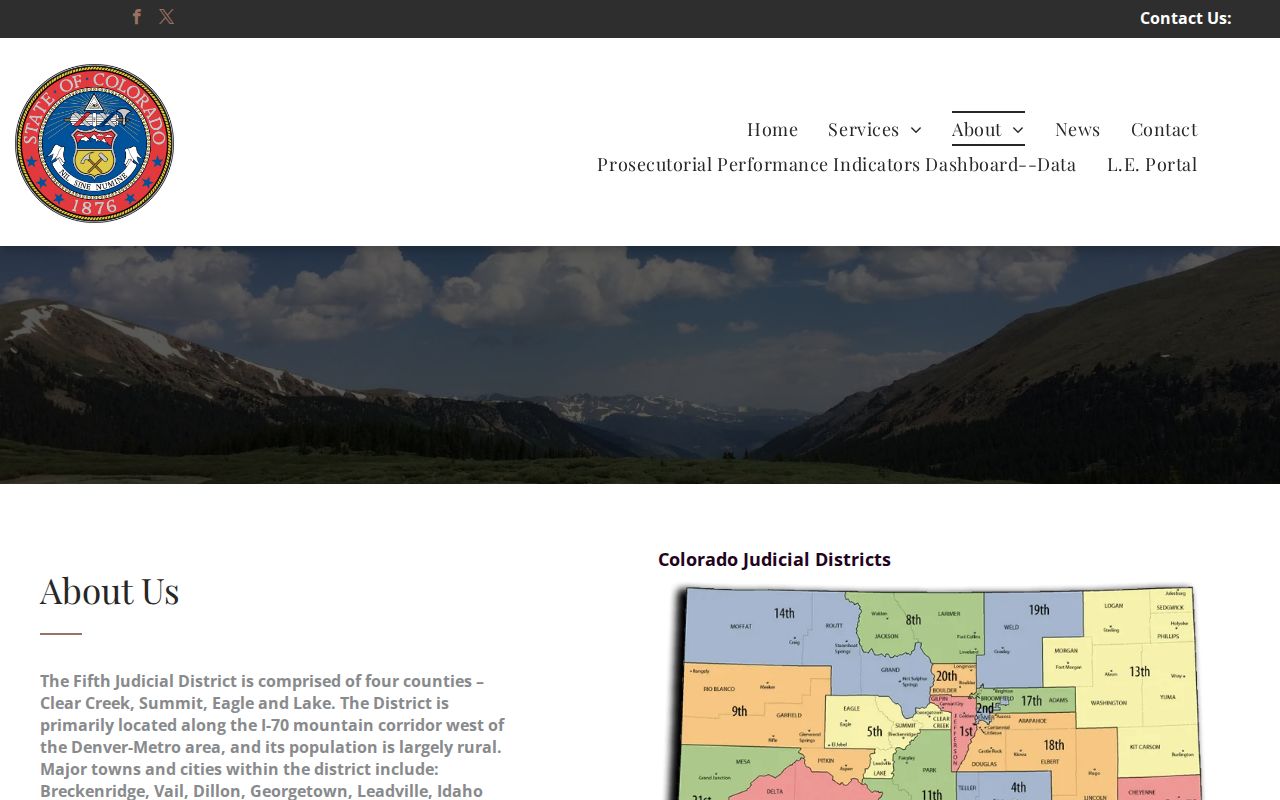
The prosecutor role matters because an arrest does not become a criminal court case until charges are filed or accepted by the court.
Search Eagle County Criminal Court Records
Start with the Colorado Judicial Branch docket search when the goal is to find a scheduled hearing. Use Eagle County, the 5th Judicial District, or the Eagle County Justice Center filter. If a case number or party name is known, a paid vendor register-of-actions search such as CoCourts may help identify case status, filing date, and event history. Neither path supplies certified copies or complete criminal court documents. The court staff roster identifies MaLinda Hollis as Clerk of Court and Probate Registrar for local court-record contact.
- Identify the court from the summons, bond paperwork, jail paperwork, ticket, or notice.
- Search the statewide docket tool by date and Eagle County filter for scheduled hearings.
- Use paid register-of-actions data only for case-level tracking, not as an official court record.
- Contact Eagle Combined Courts for filed documents, certified dispositions, and sentencing orders.
- Check municipal court if the matter began as a town ordinance or municipal traffic case.
For broader public access rules and case-document channels, see Eagle County court records. Criminal case searches should avoid assuming that a booking offense, a sheriff report, and a court-filed count are identical. Charges can be amended, reduced, added, or dismissed as the case develops.
Eagle County Criminal Case Flow
Criminal court records should be read in sequence. Early entries may show arrest-related filing, complaint, advisement, bond, and arraignment. Later entries may show motions, hearings, plea negotiations, trial settings, verdicts, deferred judgment agreements, probation terms, restitution, costs, or sentencing. A docket entry does not prove the full result unless the disposition and sentence are clear.
Case flow: Charges Filed › Arraignment › Pretrial / Motions › Plea or Trial › Disposition › Sentencing
| Stage | What Happens |
|---|---|
| Charges Filed | The complaint or information opens the court case and lists the counts being pursued. |
| Arraignment | The defendant is advised of charges and plea options, and a plea may be entered or scheduled. |
| Pretrial / Motions | The parties address discovery, suppression, evidentiary issues, continuances, diversion, or plea talks. |
| Plea or Trial | The case resolves by plea agreement, trial verdict, acquittal, dismissal, or other court action. |
| Disposition / Sentencing | The record shows the outcome and any jail, prison, probation, fine, cost, restitution, or deferred terms. |
What Eagle Criminal Records Show
A public criminal court record can show many fields, but not all fields are visible in every case. Sealed matters, juvenile cases, victim identifiers, protected financial data, mental health details, and some active or confidential documents can be withheld or redacted. The public register of actions is a useful event list, while the clerk file is the source for documents.
| Field | What It Shows |
|---|---|
| Case Number | The court identifier for the criminal case, used for docket, payment, and copy requests. |
| Defendant | The person charged in the case, sometimes with limited identifying data in public view. |
| Charges | Counts filed by complaint, information, or other charging document, with later amendments if entered. |
| Bond Conditions | Release terms, bond type, bond amount, or no-contact terms when shown in the court file. |
| Plea | Guilty, not guilty, no contest where allowed, deferred judgment, or other plea-related event. |
| Disposition | Dismissed, acquitted, convicted, deferred, transferred, or other outcome for each count. |
| Sentence | Jail, prison, probation, restitution, fines, costs, classes, treatment, or other court-ordered terms. |
Eagle Charges vs Convictions
A filed charge is an accusation. A conviction is a final outcome based on a guilty plea, verdict, or other qualifying court result. Eagle County criminal court records can show charges that were dropped, reduced, dismissed, deferred, or resolved by plea to a different count. That is why a record should be read count by count rather than treating the first charge list as the final result.
| Point | Charge | Conviction |
|---|---|---|
| Meaning | A formal accusation filed in court | A proven or admitted criminal outcome |
| Timing | Early in the case | At disposition, verdict, plea, or sentencing |
| Can Change | Yes, charges may be amended, reduced, added, or dismissed | Changes only through later court action, appeal, or post-judgment relief |
| How to Verify | Read the charging document and later docket entries | Read disposition and sentencing records from the court |
DA Diversion and Filed Cases
The 5th Judicial District Attorney program support page lists Adult Diversion, Juvenile Diversion, Crime Stoppers support, and Bad Check Program Prevention. Diversion is voluntary, available across the district, and eligibility is determined by the District Attorney. If diversion occurs after a criminal case is filed, the court record may still show the filed case and later dismissal or sealing-related outcome.
The DA's role is also important when sheriff reports are requested. The Sheriff's Records page says defendants in active or open cases cannot obtain reports from the sheriff and may need to contact the District Attorney's Office. That rule keeps investigation and prosecution records separate from public case-file access.
The DA program support source is shown below because diversion can affect how Eagle County criminal court records move toward dismissal, plea, or sentencing.
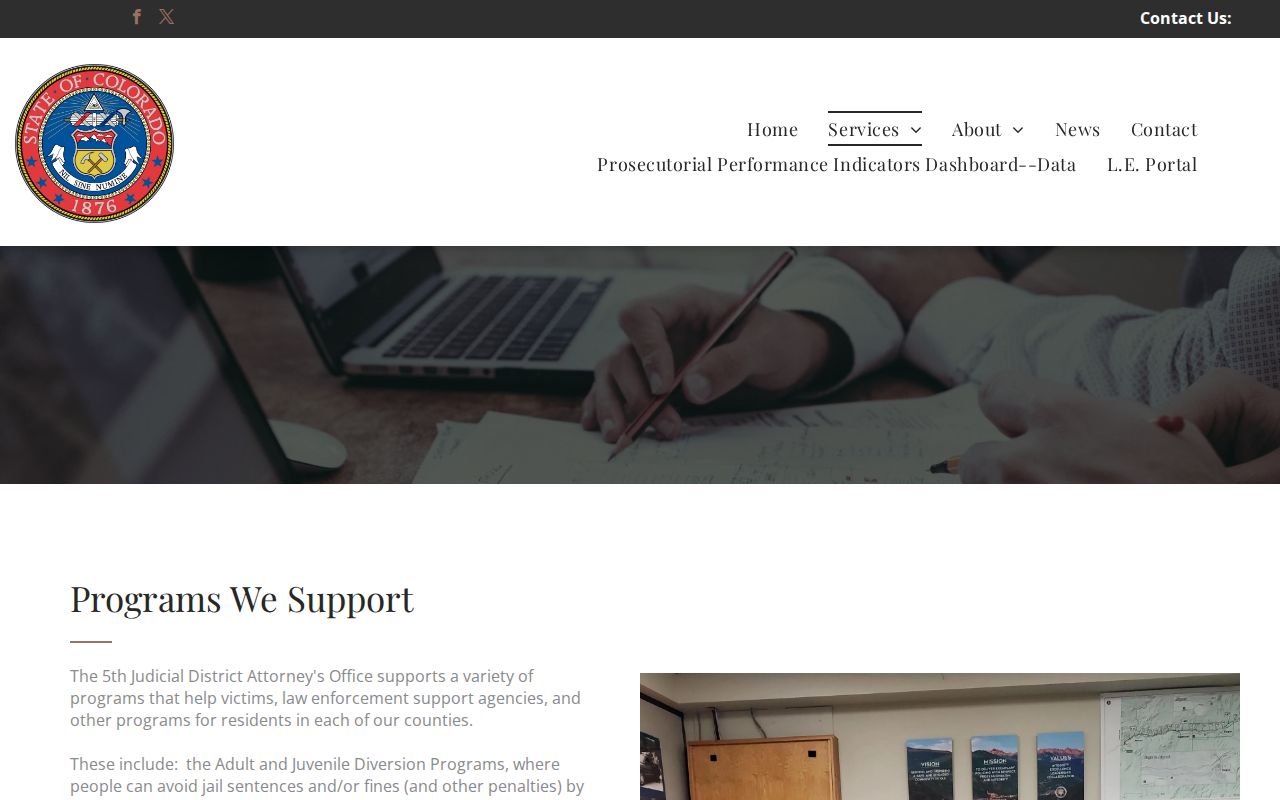
Diversion should be checked from the court record and the prosecutor's office, not inferred from a jail booking or arrest report alone.
Sealed and Expunged Criminal Records
Colorado uses sealing often for adult criminal records. The Judicial Branch explains sealing as hiding criminal records from public view while the records still exist. Expungement is a stronger form of relief used in specific settings, and adult criminal relief often uses sealing instead. General Assembly materials describe automatic sealing for several no-conviction results, including complete dismissal, acquittal, diversion completion after filing, and deferred judgment followed by dismissal of all counts.
| Point | Sealed | Expunged |
|---|---|---|
| Public View | Hidden from ordinary public access | More limited public access, sometimes treated as removed where authorized |
| Record Exists | Yes, with access for law enforcement or authorized users in some settings | Depends on the specific law and record type |
| Colorado Use | Common adult criminal relief route | More limited and often tied to specific case categories |
| Eagle County Path | Use current Colorado Judicial Branch forms in the court that handled the case | Verify eligibility before relying on public-search absence |
Public Defender Record Context
The Colorado State Public Defender provides representation for people accused of crimes who cannot afford counsel. Judicial Branch instructions identify JDF 208 for adult requests for a state-paid professional and JDF 219 for juvenile delinquency public defender applications. The public defender application process requires an application, proof of income or documentation, and submission to the appropriate office.
The Colorado State Public Defender office list is a statewide source for the trial-office structure that serves Colorado judicial districts.
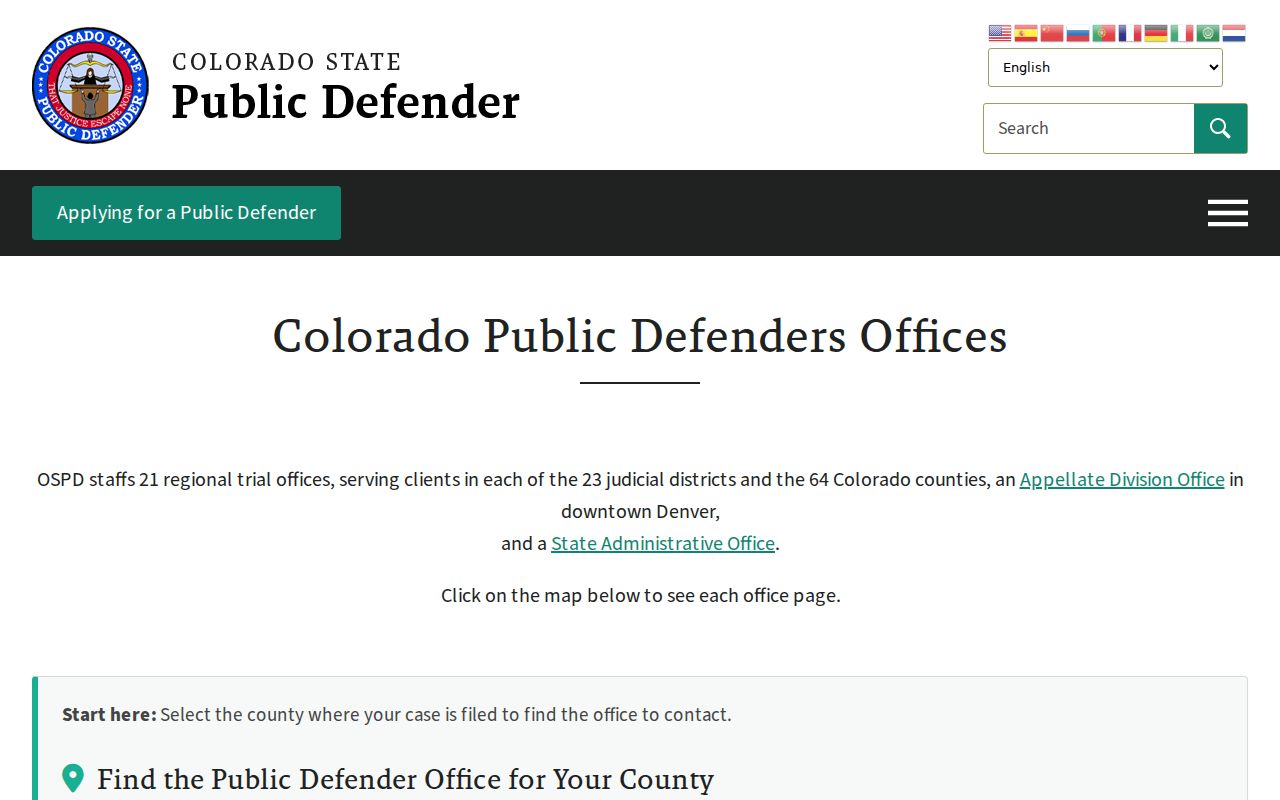
Public defender information does not replace a criminal court record, but it helps explain why appointment and counsel entries may appear in the docket.
The public defender application page is also relevant when an Eagle County criminal case shows counsel appointment events.
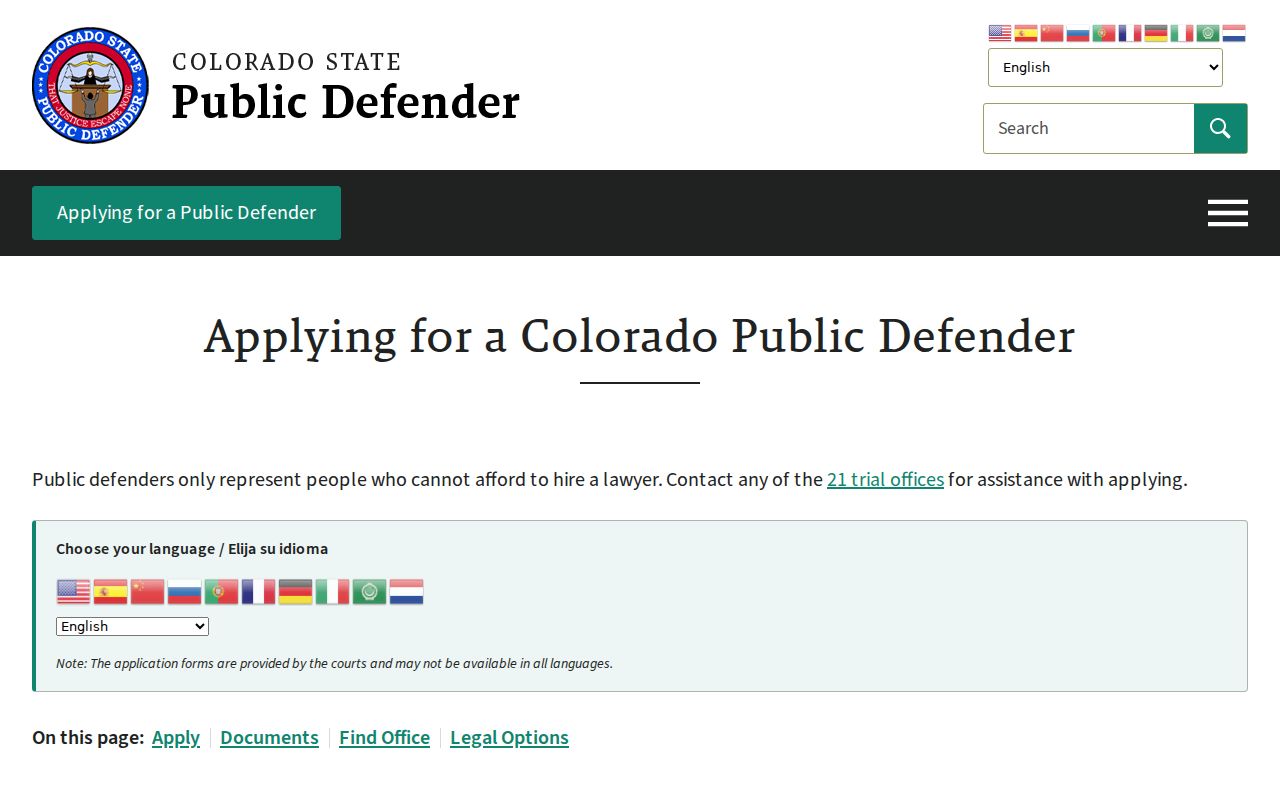
Application steps and court appointment entries are separate from guilt, innocence, or final case outcome.
Restricted Eagle Criminal Records
Restricted Eagle County criminal court records include juvenile delinquency matters, sealed cases, expunged matters where applicable, victim identifying information, child witness or child victim identifiers, protected financial data, mental health information, and records made confidential by rule or statute. Sheriff's Office records under Sheriff James van Beek have additional limits, including a rule that reports are not released to a defendant in an active or open case through the sheriff records path.
Note: A missing public search result may mean no case, a wrong court, a sealed record, or a municipal venue.
Public criminal records should be verified with the filing court before they are used as proof of disposition, sentence, or eligibility for sealing. Eagle County criminal cases can involve state court, municipal court, sheriff custody, DA screening, public defender appointment, and later collection or probation entries, so a single lookup may not show the whole history.
When the case began with a municipal citation, confirm whether it stayed in town court or moved into Eagle County Court before ordering copies.